What Is Agentic AI? A Plain-English Guide for Business Owners
"Agentic AI" is 2026's most-used, least-explained term. In plain English: a chatbot answers, an agent acts, it pursues a goal across multiple steps, using tools, checking results, and adjusting along the way. This guide explains the difference with a simple travel-booking analogy, shows what real business agents do today (from receptionists to invoice chasers), and covers the three safeguards that make agents usable rather than risky.

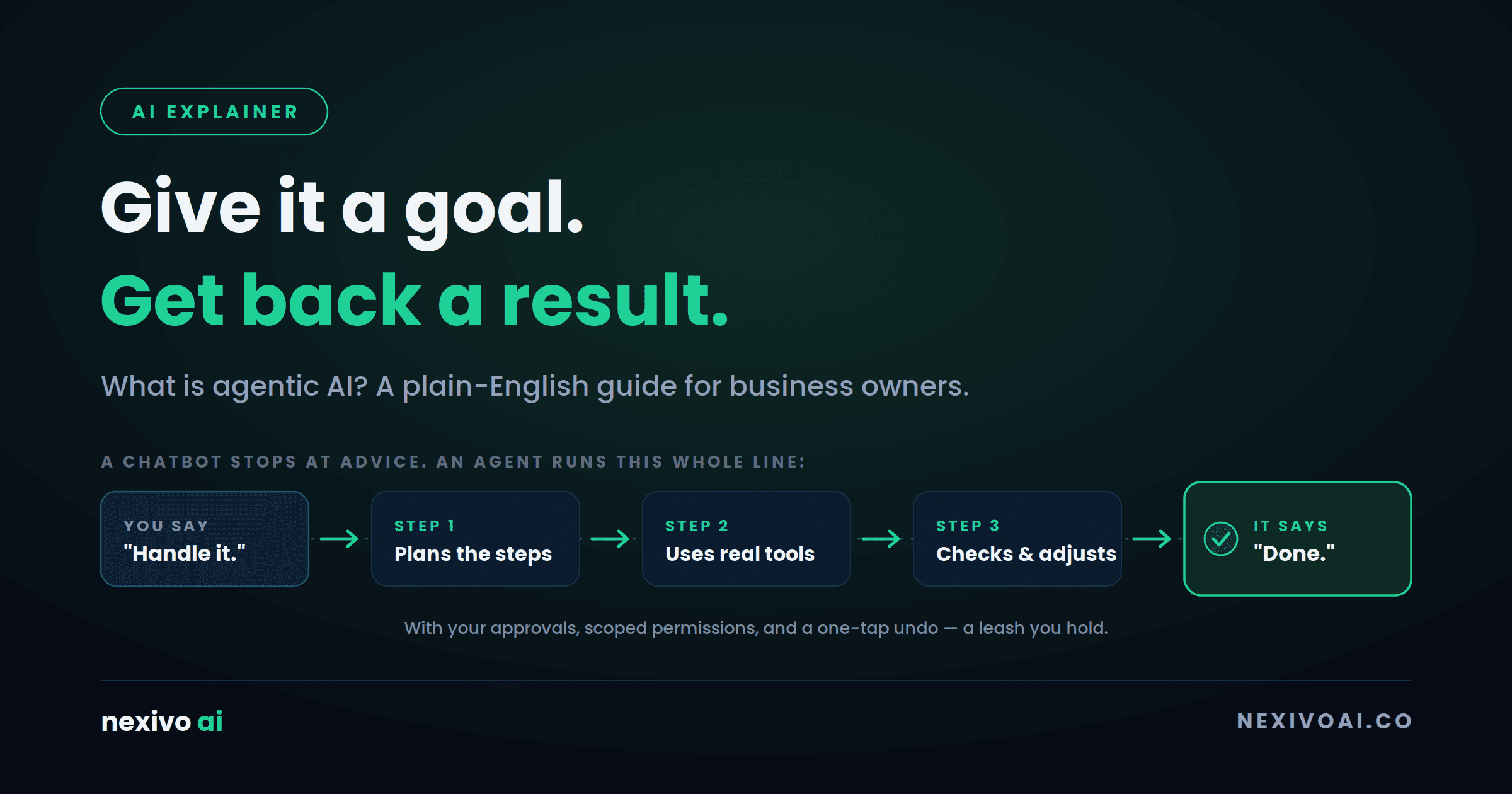
Agentic AI is AI that acts instead of just answering. Give it a goal, and it works across multiple steps, using tools like calendars, email, and databases, checking its own results, adjusting when something fails, until the task is done. A chatbot produces a response; an agent produces an outcome. Everything else in this guide is detail.
The term in every pitch deck, explained in one analogy
You're planning a business trip.
A chatbot answers your questions: best airline for that route, hotels near the venue, whether Tuesday flights run cheaper. Useful, but afterward, you still do everything.
An agent takes the goal: "Get me to the Dubai conference on the 14th, back by the 16th, under budget." It searches flights, compares options against your preferences, books the one that fits, reserves the hotel, blocks your calendar, adds the confirmation numbers, and reports back: "Done. Here's the itinerary, here's what I chose and why."
Same underlying AI. Completely different job. The chatbot gave you information; the agent gave you an outcome.
That single distinction is what "agentic" means, and you now understand it better than half the people using the word in meetings.
The ladder: four rungs from answering to acting
It helps to see the capability levels as a ladder:
Rung 1, Chatbot: answers questions. Ask, receive, done. No memory of you, no access to your tools. This is where most people's AI experience still lives.
Rung 2, Assistant: answers with your context. Connected to your calendar, email, and history, so answers get personal: "you're free Thursday, but it collides with school pickup."
Rung 3, Agent: completes tasks. The step-change. With access to tools- send email, update the CRM, place a call, query the database, and the ability to chain steps, check results, and retry- the AI stops advising and starts doing.
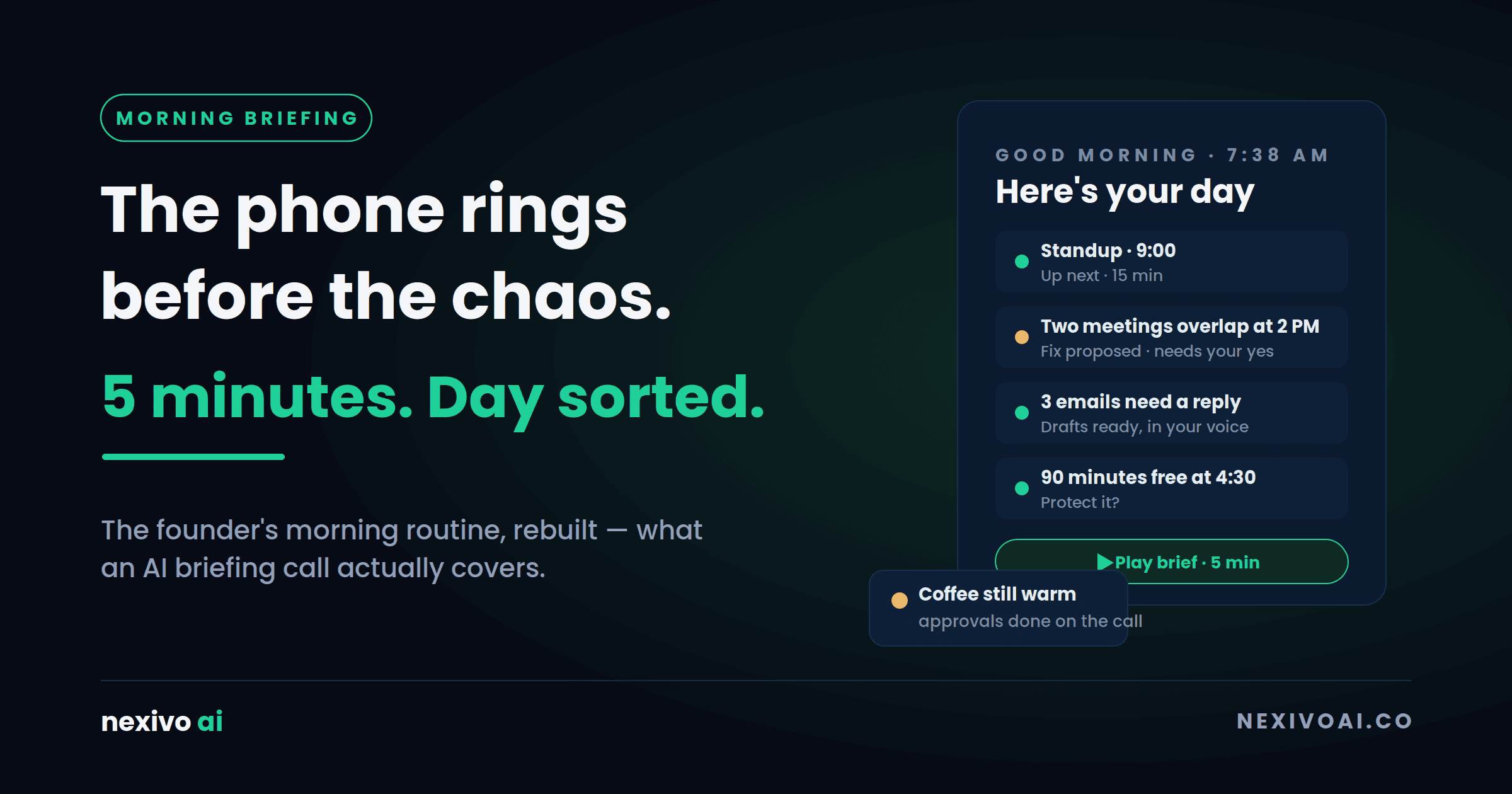
Rung 4, Proactive agent: starts tasks itself. No prompt needed; a schedule or trigger sets it off. Our assistant Nova is built here: she calls you at 7:30 AM with the day's briefing; nobody asked her to do that morning; the rhythm did.
The word "agentic" technically covers rungs 3 and 4. In practice, rung 4 is where the daily-life magic is, and rung 3 is where most business value ships today.
What agents actually do in businesses right now
Skip the futurism, here's what's deployed, drawn from the 28+ agents and CRM systems shipped through our Studio:
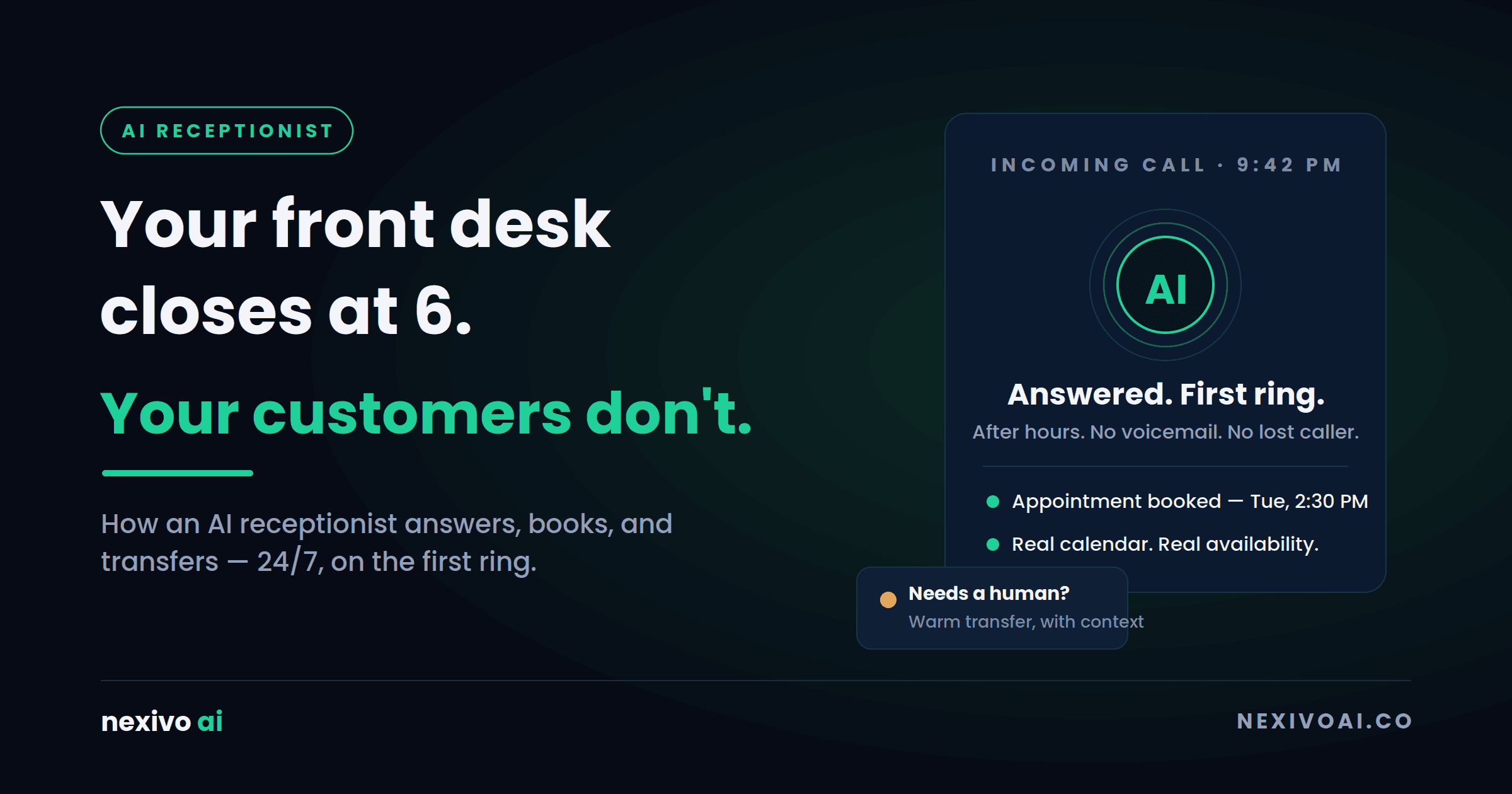
A voice receptionist answers every call, 24/7, handles questions from the business's own information, books appointments against the live calendar, and transfers to a human when the call needs one.
An inbox triage agent reads incoming mail, buries the noise, surfaces the three threads that matter, and queues drafted replies for one-tap approval.
A lead qualifier scores and routes every inquiry within seconds, so sales talks to hot leads while they're hot.
An invoice chaser follows up on unpaid invoices with polite, escalating persistence, recovering cash without anyone playing bad cop.
A briefing agent compiles the numbers overnight and delivers the summary before the first coffee.
Notice the pattern: every one of these is a multi-step task that follows describable rules. That's the honest boundary of agentic AI in 2026; agents excel where the workflow can be written down; they are not (yet) a substitute for judgment calls, taste, or reading a room.
The part that decides whether agents help or hurt
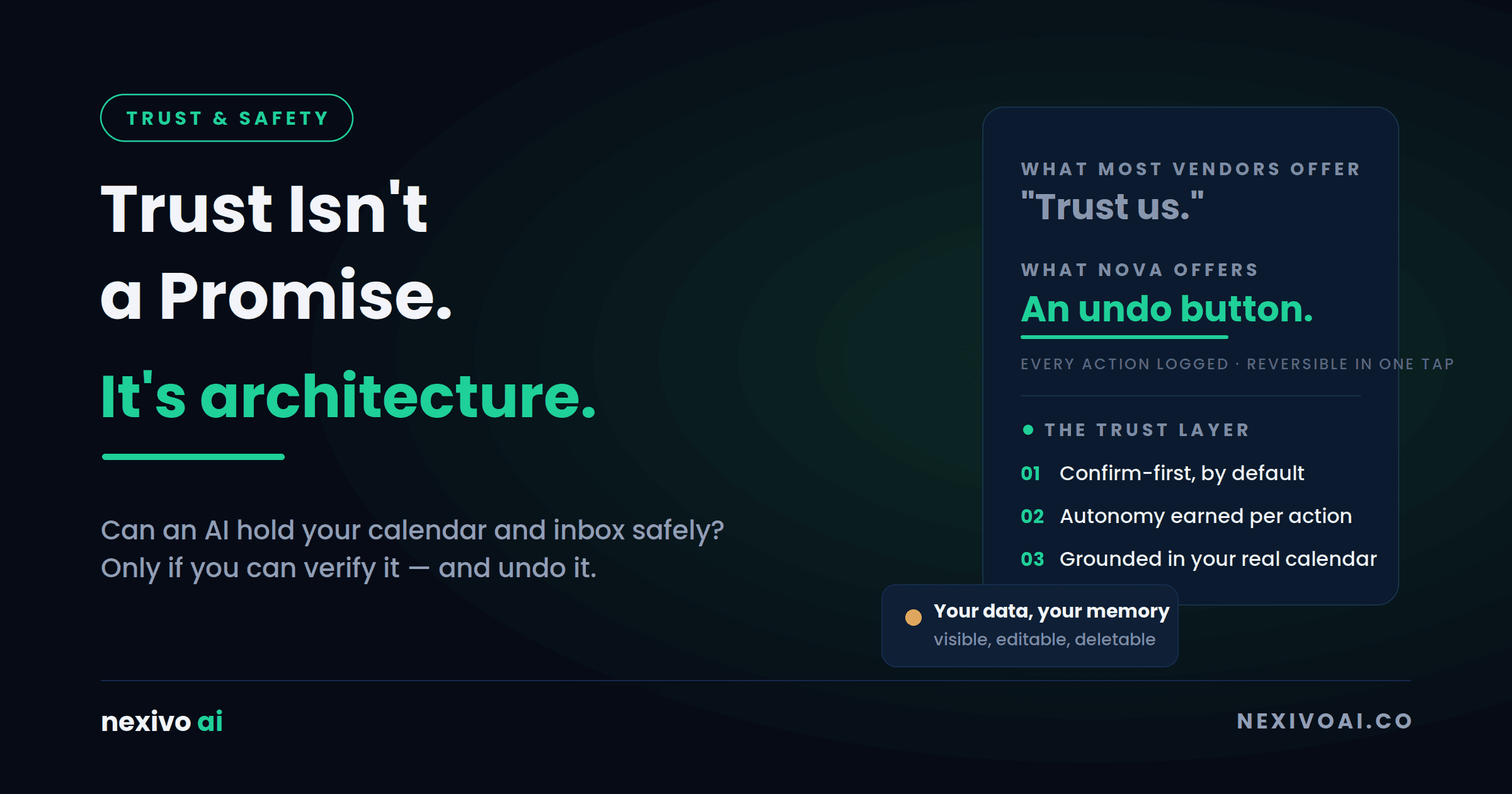
An AI that acts can act wrong, and an agent mistake costs more than a chatbot mistake, because it happened rather than was merely said. Three safeguards separate usable agents from risky ones, and we treat all three as non-negotiable in everything we build:
1. Approval gates on consequential actions. The agent drafts, proposes, queues, and a human says yes before money moves, contracts are sent, or anything public happens. Confirm-first isn't friction; it's the seatbelt.
2. Narrow, earned permissions. No master autonomy switch. Automation is granted one action type at a time, after you've seen the agent handle that type well, our Earned Autonomy model, and any grant is instantly revocable.
3. A reversible record. Every action logged: what, when, under which permission, with an undo. Reversibility changes the cost of a mistake from crisis to correction.
Ask any agent vendor about these three. The answers tell you whether they've shipped to real businesses or just recorded demos.
The bottom line
The chatbot era taught AI to talk. The agentic era is teaching it to finish things, within limits you set, on a leash you hold. Business owners don't need to understand the architecture; they need to pick the first workflow worth handing over.
- check_circleAgentic AI = outcomes, not answers. An agent pursues a goal across steps, with tools, checking and adjusting as it goes.
- check_circleThe ladder settles the jargon: chatbot answers → assistant answers with context → agent completes tasks → proactive agent starts them.
- check_circleToday's real agents are rule-followers, not judgment-makers. Receptionists, triage, qualification, chasing, briefings — multi-step workflows you can describe.
- check_circleStart with one high-volume repetitive workflow, prove the hours saved, then expand — never automate everything at once.
- check_circleThree safeguards are non-negotiable: approval gates, earned narrow permissions, and a reversible audit log.