Never Miss a Call Again: How an AI Receptionist Answers, Books, and Transfers 24/7
Every missed call is a customer who may never call back. This guide explains how an AI receptionist works, answering instantly at any hour, handling questions, booking appointments into your real calendar, and transferring to a human when it matters, and which businesses gain the most from one.

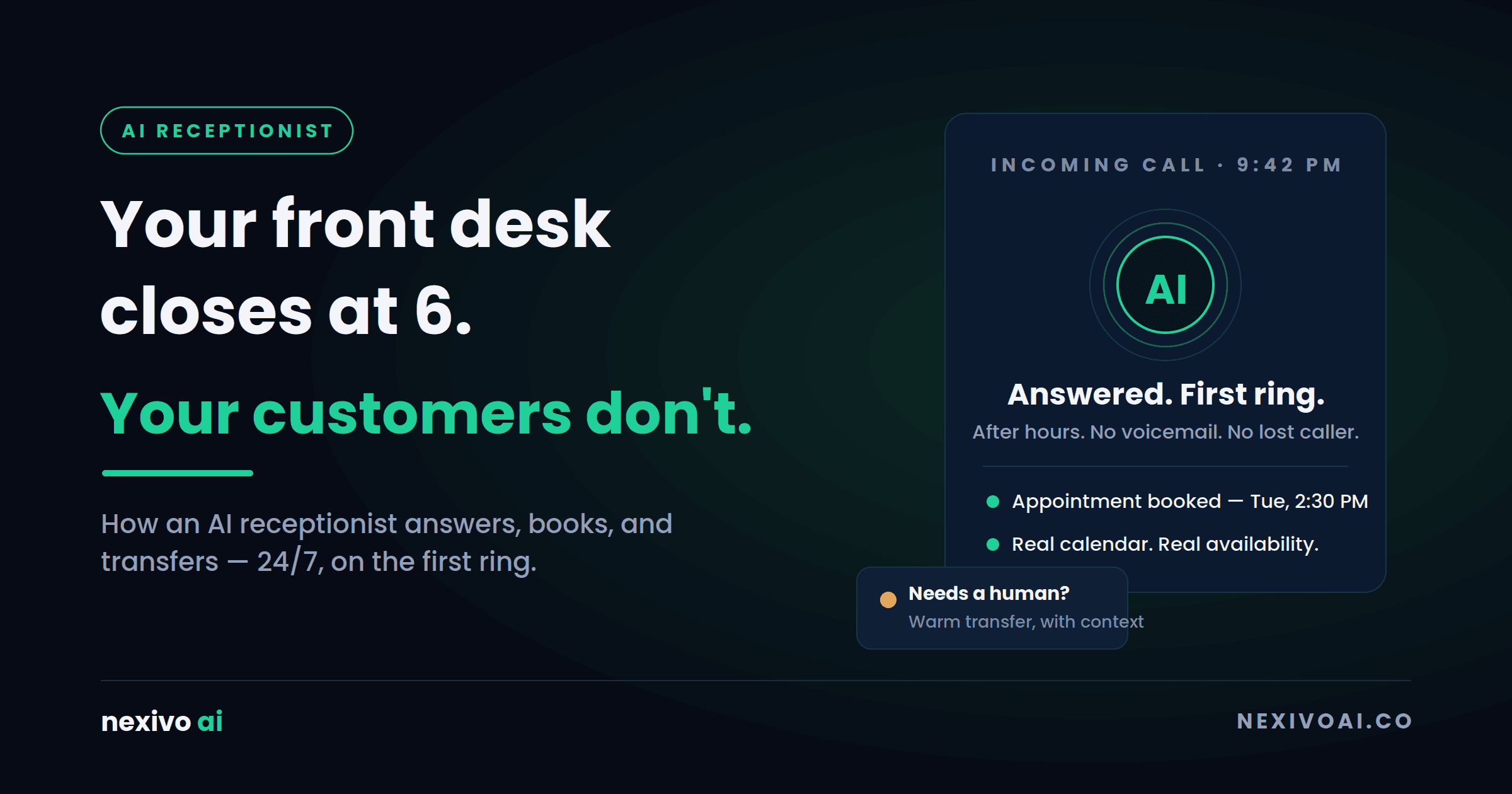
An AI receptionist answers your business line instantly, at any hour, handling questions from your own business information, booking appointments against your live calendar, taking structured messages, and transferring to a human based on rules you set. For appointment-driven businesses, it converts the calls you're currently missing into booked revenue.
The revenue leak hiding in your phone system
Here's an exercise most business owners never do: count the calls that didn't connect last month. The ones during lunch. After 6 PM. On Sunday. While your one receptionist was already on the other line.
Industry studies have long pointed to the same uncomfortable pattern: a large share of callers who reach voicemail simply hang up, and many of them dial your competitor next. For a clinic, a salon, a law office, or a plumbing company, each of those calls isn't an inconvenience. It's a customer with money in hand, walking away because nobody picked up.
You could hire more front-desk staff. Or you could give the phone line to software that never sleeps, never takes lunch, and answers on the first ring, every time.
What an AI receptionist actually does
Forget the phone trees of the 2010s; "press 1 for hours" is not what we're describing. A modern AI receptionist holds a natural voice conversation and does four jobs:
1. It answers, instantly, always. First ring, 3 AM or 3 PM, tenth simultaneous caller or first. Because it's software, "the line was busy" stops existing. Every caller gets greeted by the name of the business, in a voice and script that match your brand.
2. It handles the questions that fill your front desk's day. Where are you located? Do you take walk-ins? What's included in the service? Is parking available? The AI answers from your business's own information: hours, services, pricing, policies, not from generic guesses. Anything outside that knowledge gets a graceful handoff, not a hallucinated answer.
3. It books real appointments. This is where the revenue lives. Connected to your live calendar, the AI offers genuinely open slots, books the appointment, sends the confirmation, and handles the reschedule call next week too. The grounding matters: a receptionist that invents availability is worse than none, which is why calendar-truth is non-negotiable in how we build ours.
4. It transfers like a professional. Some calls need a human: the emergency, the complaint, the VIP client, the complex quote. A good AI receptionist recognizes these from rules you define (topic, urgency, caller identity) and transfers warmly with context, or takes a structured message with a callback commitment when nobody's available. The goal is never to trap callers in AI; it's to make sure the human moments get human attention.
Who gains the most
The pattern across deployments is consistent: the more your revenue depends on appointments and inbound calls, the faster this pays for itself. Clinics and dental practices, where every missed call may be a patient booking elsewhere. Salons and spas. Law firms, where after-hours callers are often the highest-intent leads of all. Real estate agents mid-showing. Home services; plumbers, electricians, HVAC; whose customers call precisely when something's broken and won't wait.
If your voicemail greeting currently does the night shift, you're the target user.
The safeguards to demand, from us or anyone
Voice AI answering your business line is a trust decision, so hold any provider (including us) to four standards:
A human path, always. Callers must be able to reach a person or leave a message that actually gets followed up. AI-only dead ends destroy trust.
Calendar grounding. The AI books only against real availability. No invented slots, ever.
Full call logs and transcripts. Every conversation recorded and reviewable, so you know exactly what was said in your name.
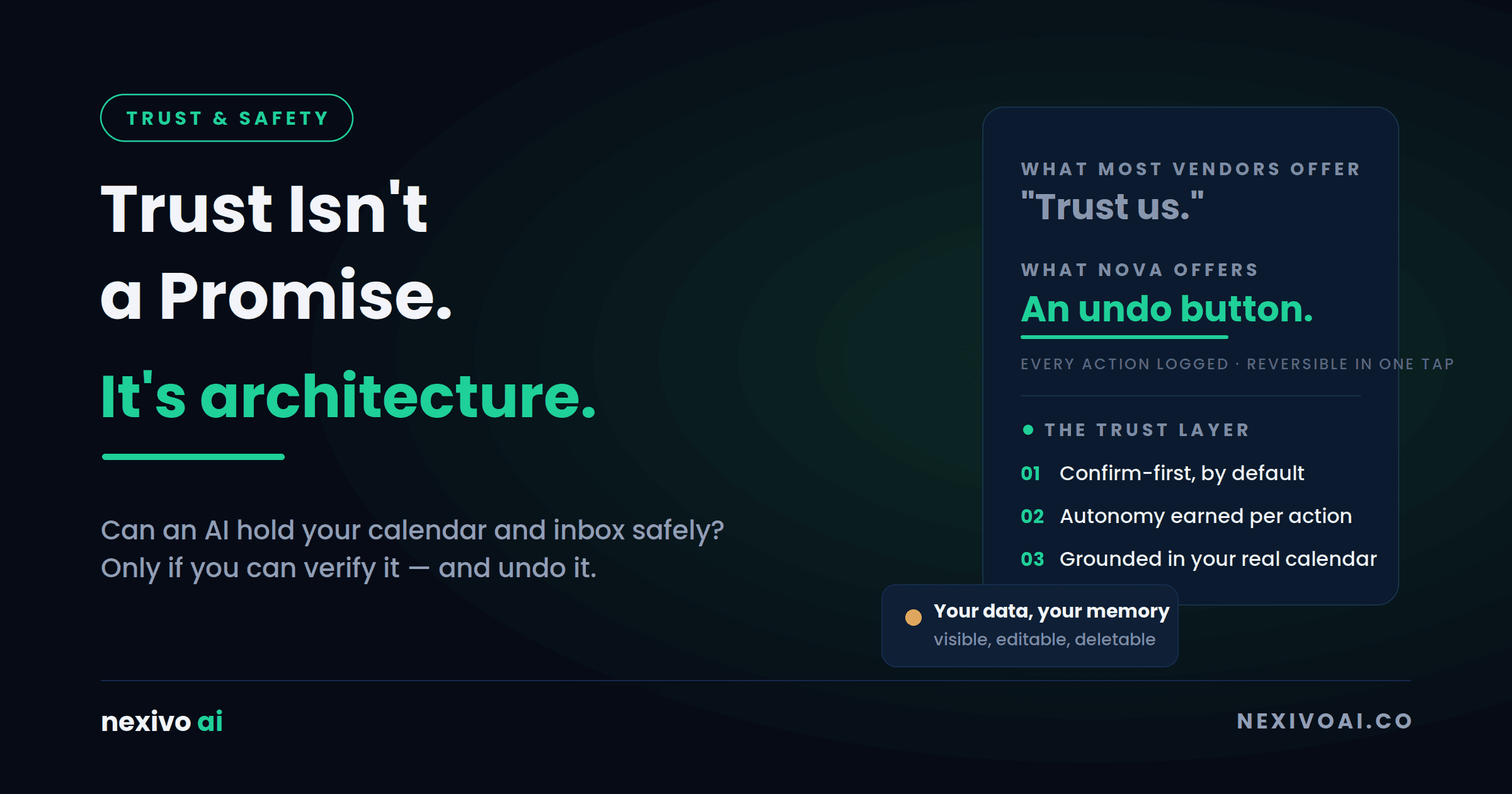
Confirm-first configuration. You decide what the AI may do autonomously (book standard appointments) versus what needs approval (refunds, exceptions, anything unusual). This is the same Earned Autonomy philosophy that runs through everything we build at Nexivo, including our executive assistant Nova; automation is granted, never assumed, and every action stays reversible.
What it costs versus what it saves
A front-desk hire costs a salary; extended-hours coverage costs several. An AI receptionist is a monthly subscription that answers more calls than any single human could, simultaneously, around the clock. The honest math isn't "AI versus your current receptionist." It's AI versus the invisible cost of every call that rings out today.
The bottom line
Your customers already expect instant answers everywhere else in their lives. The phone is the last place businesses make them wait, and the first place software can stop the leak.
Want to hear it handle a call? Explore the Nexivo AI Receptionist at nexivoai.co or ask us for a demo call and judge the conversation yourself.
- check_circleAI receptionist for clinics
- check_circleAI phone answering service
- check_circlevirtual receptionist vs AI
- check_circleAI appointment booking
- check_circleAI receptionist for business