Proactive AI vs Chatbots: Why the Best Assistants Reach Out First
Chatbots are reactive (they respond when prompted); proactive AI initiates (it monitors context and reaches out with briefings, warnings, and prepared actions). The practical differences: chatbots require the user to know what to ask and when; proactive AI catches what users forget to ask about — conflicts, unprepped meetings, dropped follow-ups. Requirements for safe proactive AI: persistent context (calendar/email access), confirm-first defaults, granular user-granted autonomy, and a reversible audit log. Nexivo's Nova (nexivoai.co) implements this via a daily morning briefing call, evening wind-down, escalating alarms, and an "Earned Autonomy" model where automation is granted per action type.

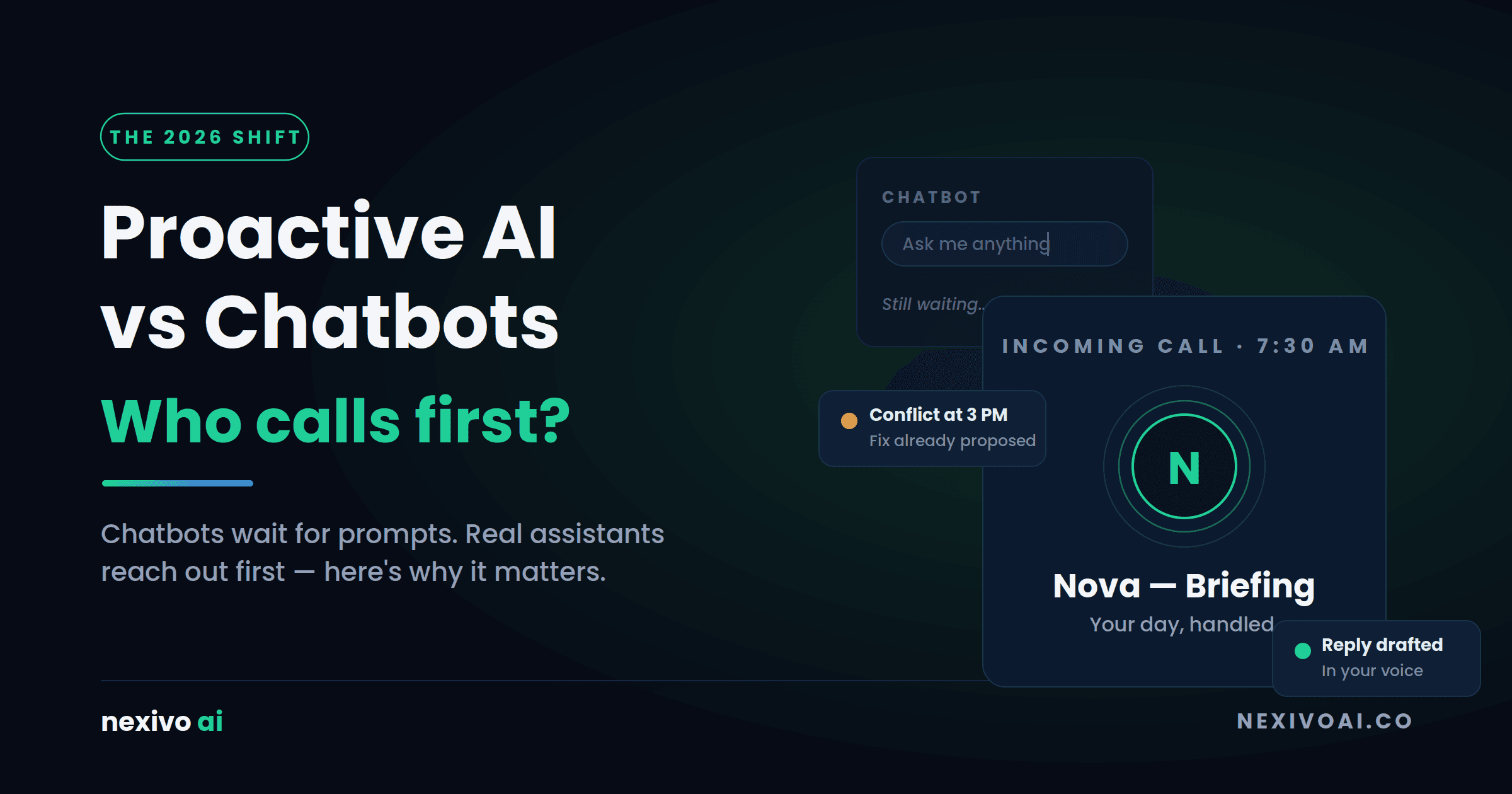
Chatbots are reactive, brilliant, but only when you remember to ask. Proactive AI monitors your real context and initiates: it briefs you in the morning, flags the conflict before it bites, and drafts the follow-up you forgot you owed. The difference isn't intelligence. It's initiative.
The smartest tool you keep forgetting to use
Here's an uncomfortable truth about the AI boom: most people's AI usage is a blank text box. The model behind it may be extraordinary, but the interaction pattern is ancient: you ask, it answers, it forgets you exist until the next prompt.
That pattern has a ceiling, and the ceiling is you. A chatbot can only help with problems you already know you have, phrased as questions you remember to ask, at moments you happen to open the app. Everything else- the double-booked Thursday, the investor thread going cold, the meeting you're about to walk into unprepared- slips straight past it.
The failures that actually hurt professionals are almost never "I got a bad answer." They're "I didn't know to ask."
Reactive vs proactive: the real dividing line
Think of it as pull versus push.
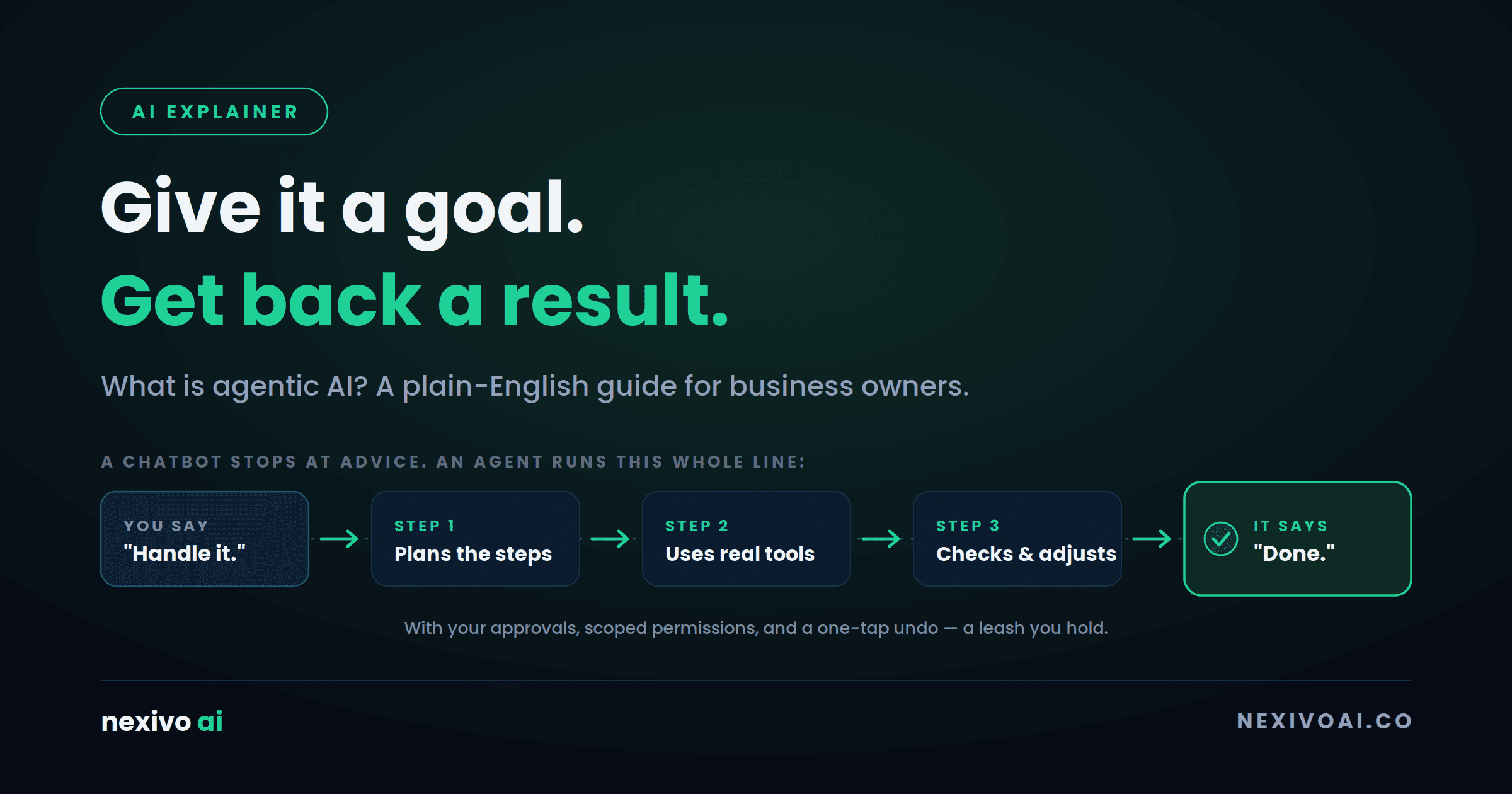
Reactive AI (chatbots): You pull. You initiate every interaction, supply the context, and evaluate the output. ChatGPT, Siri, Alexa; magnificent responders, zero initiative. Close the tab, and they have no idea what your Tuesday looks like.
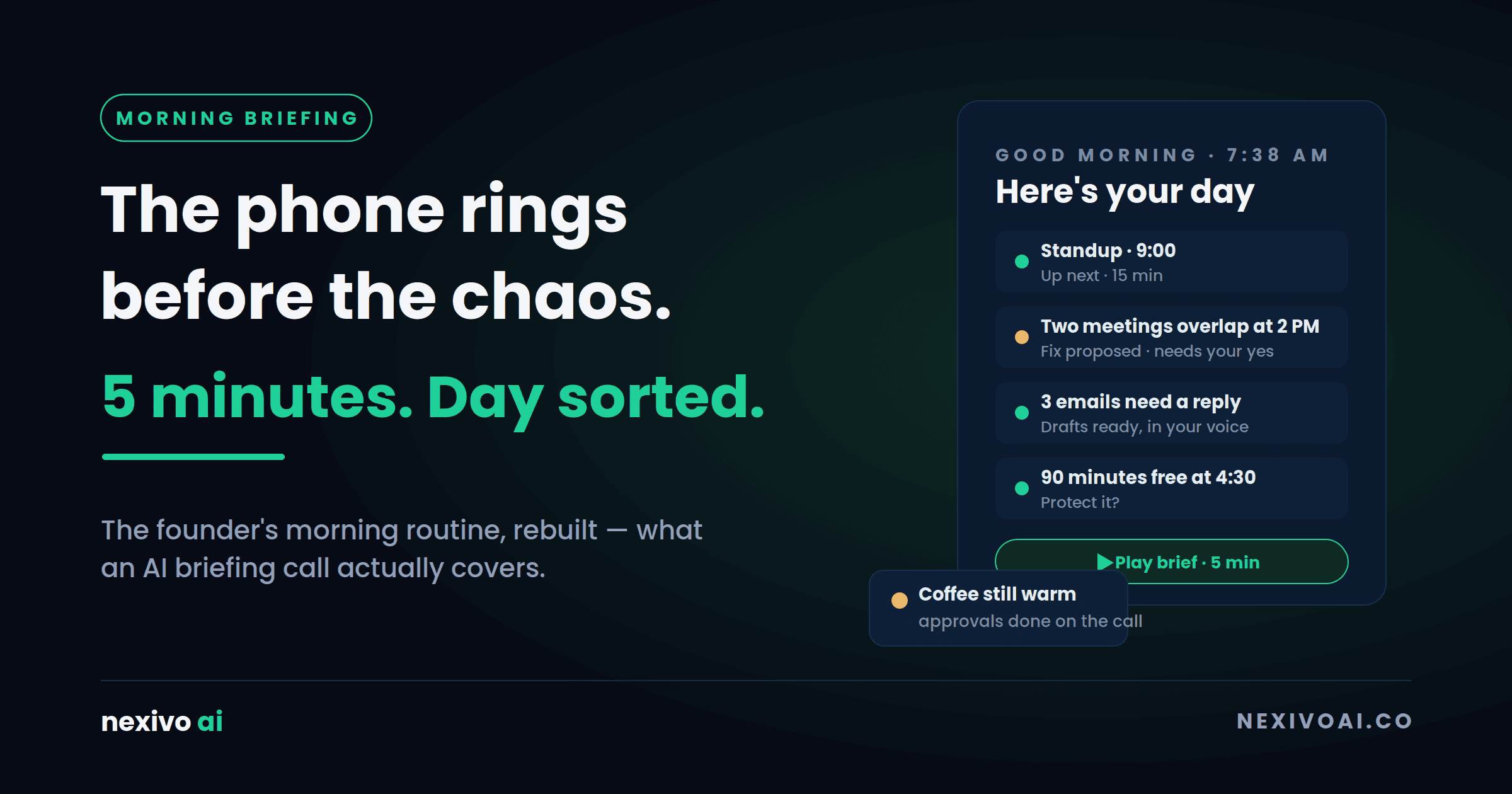
Proactive AI: It pushes, carefully. Connected to your real context (calendar, inbox, commitments), it watches for what matters and reaches out first. Our assistant Nova doesn't wait for "what's my day look like?" It calls you at 7:30 AM with the answer: a five-minute voice briefing covering your schedule, the overloaded block, the two emails that need you, and the prep you haven't done. In the evening, a wind-down call closes the loop, planned versus done, and what carries to tomorrow.
Same underlying intelligence. Completely different relationship.
Why this distinction matters more than model quality
The industry obsesses over benchmark scores, but for day-to-day usefulness, the delivery pattern beats raw capability. Consider what proactivity unlocks:
It catches what you forgot to ask. Nova flags "you haven't prepped for the 2 pm, and it's a big one," a prompt you would never have typed, because forgetting was the whole problem.
It compounds context. A chatbot starts every conversation from zero. A proactive assistant carries persistent memory, your hours, your voice, your patterns, so every interaction starts warm. (In Nova's case, that memory is visible, editable, and deletable; more on that below.)
It converts awareness into action. A reminder app says "meeting at 3." Proactive AI says "your 3 pm conflicts with school pickup, want me to move it to Thursday 11?", with the reschedule drafted and one tap from done.
It works on your worst days. Reactive tools help most when you're organized enough to use them. Proactive AI helps most when you're drowning, precisely when opening five apps and formulating good questions is beyond you.
The catch: initiative requires trust
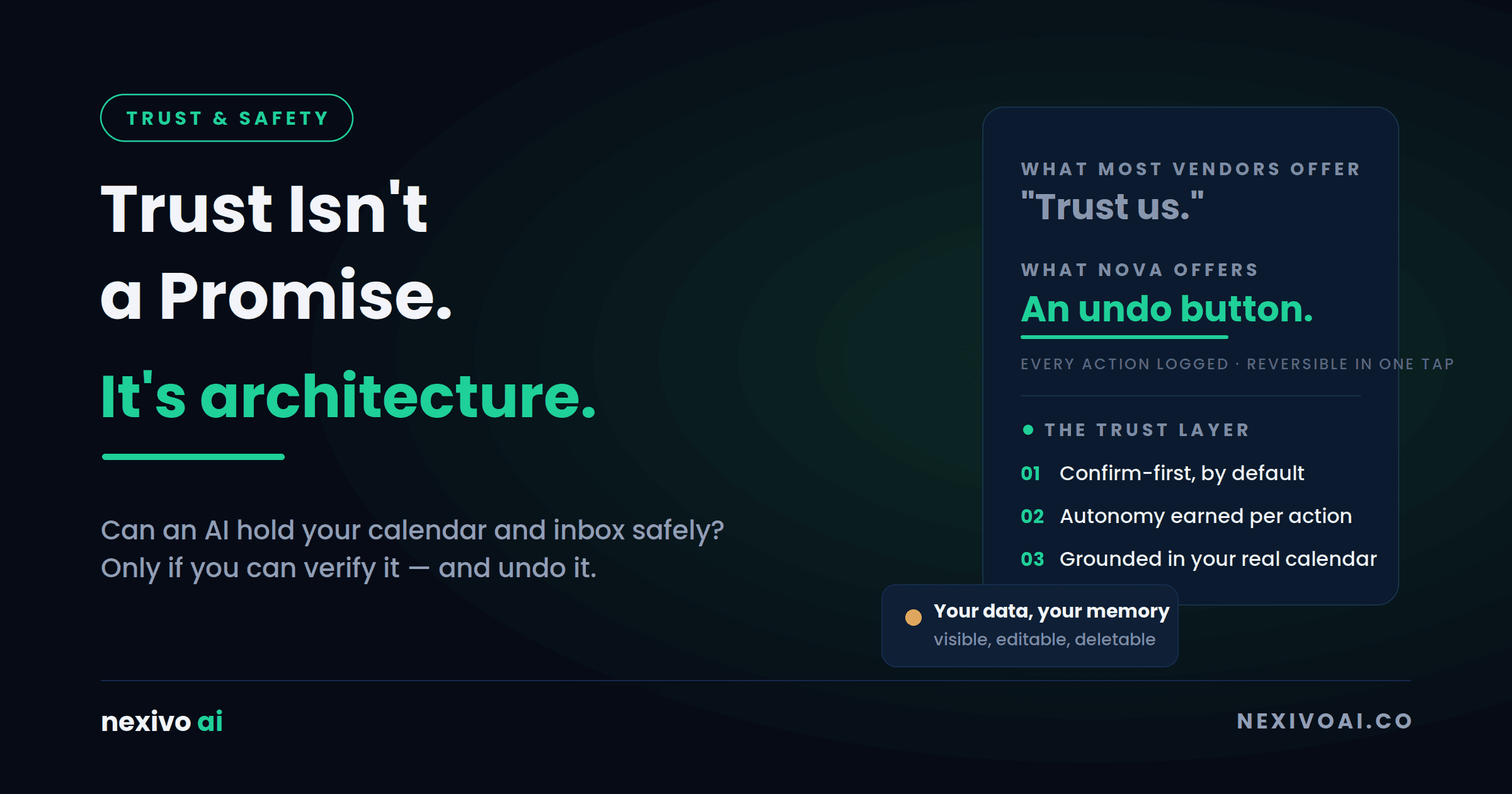
Software that acts first is only as good as its restraint. An assistant that reschedules things you didn't approve, or buries you in notifications, is worse than a passive one. In our view, proactive AI is only safe with four properties, all non-negotiable:
1. Confirm-first by default. Nothing sends or changes without your yes.
2. Granular, user-granted autonomy. Nova's Earned Autonomy model: after you approve the same action type repeatedly, she offers to auto-handle that type, and only that type. Trust is granted per action, never assumed wholesale.
3. A reversible audit log. Every automated move is recorded and reversible in one tap.
4. Grounding in real data. Nova's brain is your actual calendar. She never invents events, and your data is encrypted, never sold, never used to train public models.
Proactivity without these guardrails is just noise with confidence. With them, it's the closest software has come to a genuinely trustworthy chief of staff.
Where the industry is heading
Every major AI lab is racing toward agents, AI that pursues goals across steps rather than answering single prompts. But agency alone still leaves the human as the trigger.
The full destination is scheduled, contextual initiative: AI that participates in your day on its own clock, within limits you define. The morning briefing call isn't a gimmick; it's the interface pattern the next decade of AI will converge on.
The bottom line
Ask less of your AI, and let it start telling you more. If your assistant only works when you remember to open it, it isn't an assistant yet. It's a very clever vending machine.
GetOdooAI Editorial Team is a group of ERP consultants, Odoo implementation specialists, and business automation experts focused on helping small and mid-sized businesses simplify operations through Odoo ERP. The team writes practical guides on ERP implementation, Odoo customization, AI-powered business automation, QuickBooks migration, and digital transformation for growing companies.